

As a parent, you want to know if your baby is growing well. Every smile, every new skill, and every little increase in height or weight feels important. But how can you tell if your baby’s growth is on track?
This is where the WHO baby growth chart becomes helpful.
Doctors around the world use these charts to track a baby’s growth and development. They help parents understand whether their baby is growing within a healthy range compared to other children of the same age and gender.
In this guide, we’ll explain what WHO growth charts are, how they work, and how you can use them to track your child’s progress with a baby growth tracker.
What Is a WHO Baby Growth Chart?
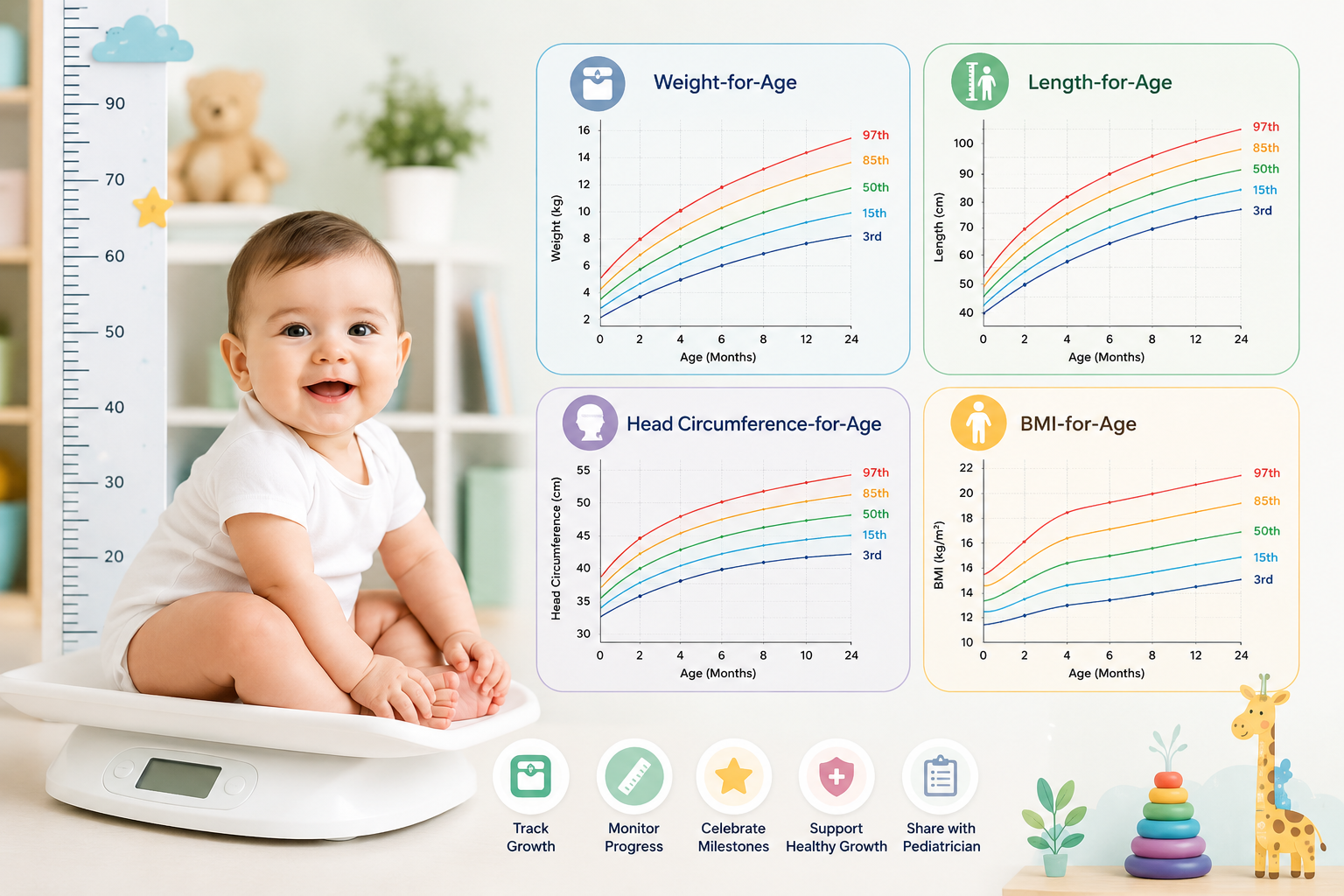
The WHO baby growth chart is a set of charts created by the World Health Organization (WHO). These charts show how babies and young children typically grow during their first years of life.
The charts are based on data collected from thousands of healthy children from different countries. They are designed to show how children should grow under healthy conditions.
Healthcare professionals use these charts to measure:
- Weight
- Length or height
- Head circumference
- Body Mass Index (BMI)
These measurements help doctors monitor a child’s overall health and development.
Why Are Growth Charts Important?
Every baby grows at their own pace. Some babies are naturally smaller, while others are larger.
The goal of a baby growth chart is not to compare your baby with every other child. Instead, it helps identify whether your baby is following a healthy growth pattern over time.
Regular tracking can help:
- Monitor healthy growth
- Detect growth concerns early
- Track nutrition and feeding progress
- Support discussions with your pediatrician
- Provide peace of mind for parents
Using a baby growth tracker app makes it easier to record measurements and view progress over time.
Understanding Percentiles
One of the most confusing parts of a WHO growth chart is the percentile.
Don’t worry—it’s simpler than it sounds.
A percentile shows how your baby’s measurements compare with other babies of the same age and gender.
For example:
- 50th percentile means your baby is right in the middle.
- 75th percentile means your baby is larger than 75% of babies their age.
- 25th percentile means your baby is larger than 25% of babies and smaller than 75%.
Many parents think being in a higher percentile is better.
That’s not true.
A baby in the 25th percentile can be just as healthy as a baby in the 75th percentile. What matters most is that your baby continues to grow steadily over time.
The Four Main Measurements on a WHO Growth Chart
1. Weight-for-Age
This measurement tracks how much your baby weighs compared to other babies of the same age.
A baby weight gain chart helps doctors determine whether your baby is gaining weight appropriately.
Weight changes can be influenced by:
- Feeding habits
- Illness
- Growth spurts
- Activity levels
Regular weight tracking helps identify potential concerns early.
2. Length or Height-for-Age
For babies under two years old, doctors measure length while the baby is lying down.
After age two, standing height is measured.
This chart helps track skeletal growth and overall development.
3. Head Circumference-for-Age
Head circumference measures the size of your baby’s head.
Since a baby’s brain grows rapidly during the first years of life, this measurement is important for monitoring healthy development.
4. BMI-for-Age
BMI is calculated using weight and height.
It helps healthcare providers assess whether a child is underweight, at a healthy weight, or overweight.
What Is Considered Normal Growth?
Parents often ask:
“What percentile should my baby be in?”
The answer is simple.
There is no perfect percentile.
A healthy baby can fall anywhere between the lower and higher percentiles.
Doctors are usually more interested in whether your baby follows a consistent growth curve.
For example:
- A baby who stays near the 30th percentile over time may be perfectly healthy.
- A baby who suddenly drops from the 70th percentile to the 20th percentile may need further evaluation.
Growth patterns tell a much bigger story than a single measurement.
How Often Should You Track Your Baby’s Growth?
During the first year, growth happens very quickly.
Most pediatricians recommend monitoring growth at regular checkups.
Common milestones include:
- Birth
- 1 month
- 2 months
- 4 months
- 6 months
- 9 months
- 12 months
Many parents use a baby growth tracker to keep all measurements in one place.
This makes it easier to see trends and share information with healthcare providers.
Growth Spurts Are Normal
Sometimes babies seem to grow overnight.
These periods are called growth spurts.
During a growth spurt, your baby may:
- Eat more than usual
- Sleep differently
- Become fussier
- Gain weight quickly
Growth spurts commonly occur around:
- 2 weeks
- 3 weeks
- 6 weeks
- 3 months
- 6 months
Temporary changes are usually normal.
This is why long-term tracking is more important than focusing on one measurement.
Growth Charts and Baby Milestones
Growth is only one part of your child’s development.
Parents should also monitor important baby milestones such as:
Physical Milestones
- Rolling over
- Sitting up
- Crawling
- Walking
Communication Milestones
- Babbling
- Responding to sounds
- Saying first words
Social Milestones
- Smiling
- Recognizing family members
- Playing with others
A complete baby growth tracker app can help parents track both physical growth and developmental milestones.
Common Mistakes Parents Make
Comparing Babies
Every child is unique.
Comparing your baby to a friend’s child often creates unnecessary stress.
Focus on your baby’s individual growth journey.
Worrying About One Measurement
A single weight or height reading doesn’t tell the whole story.
Doctors look at trends over time.
Ignoring Regular Tracking
Consistent measurements provide the most accurate picture of growth.
Recording data regularly helps identify meaningful patterns.
Misunderstanding Percentiles
Many parents think lower percentiles mean poor growth.
In reality, healthy babies can be found across many percentile ranges.
How Technology Makes Growth Tracking Easier
Years ago, parents had to rely on paper records and handwritten notes.
Today, a baby growth tracking app makes the process much easier.
With a digital tracker, parents can:
- Record weight and height
- Monitor growth trends
- Track baby milestones
- Store vaccination records
- Set reminders for checkups
- Access growth history anytime
Having all your baby’s information in one place saves time and helps you stay organized.
When Should You Talk to a Doctor?
While growth charts are useful tools, they should not replace medical advice.
Contact your pediatrician if:
- Your baby stops gaining weight.
- Growth suddenly slows down.
- Your child drops significantly across percentiles.
- Feeding difficulties occur.
- You have concerns about development.
Early guidance can help address potential issues before they become serious.
Final Thoughts
The WHO baby growth chart is one of the best tools available for understanding your child’s growth and development.
Remember, healthy growth is not about reaching the highest percentile. It’s about steady progress over time.
By tracking weight, height, head circumference, and important baby milestones, parents can better understand their child’s development journey.
Using a reliable baby growth tracker makes this process simple and stress-free. With consistent tracking and regular pediatric visits, you can feel confident that you’re supporting your baby’s healthy growth every step of the way.

Leave a Reply